


Integrated platform for product evaluation activity management
In many technical and research organizations, planning a testing activity means coordinating dozens of different elements that must be available at the same time: vehicles, tires, rims, machinery, test tracks, measuring equipment, specialized personnel, and operational capacity.
As the volume of requests grows, maintaining a clear overview of the entire process becomes increasingly complex. New activities are constantly added, priorities shift, resources are shared among different groups, and operational availability can vary from one week to the next.
To address these challenges, an integrated planning ecosystem has been developed to support the entire lifecycle of Indoor and Outdoor testing activities, from the initial request to performance analysis and final reporting.
A single environment to coordinate processes, resources, and people
The platform stems from the need to overcome information fragmentation and provide all stakeholders with a shared view of ongoing and future activities.
Through a centralized homepage, planners, operators, technicians, logistics, and resource managers access the tools necessary for their role while maintaining a consistent view of the entire process.
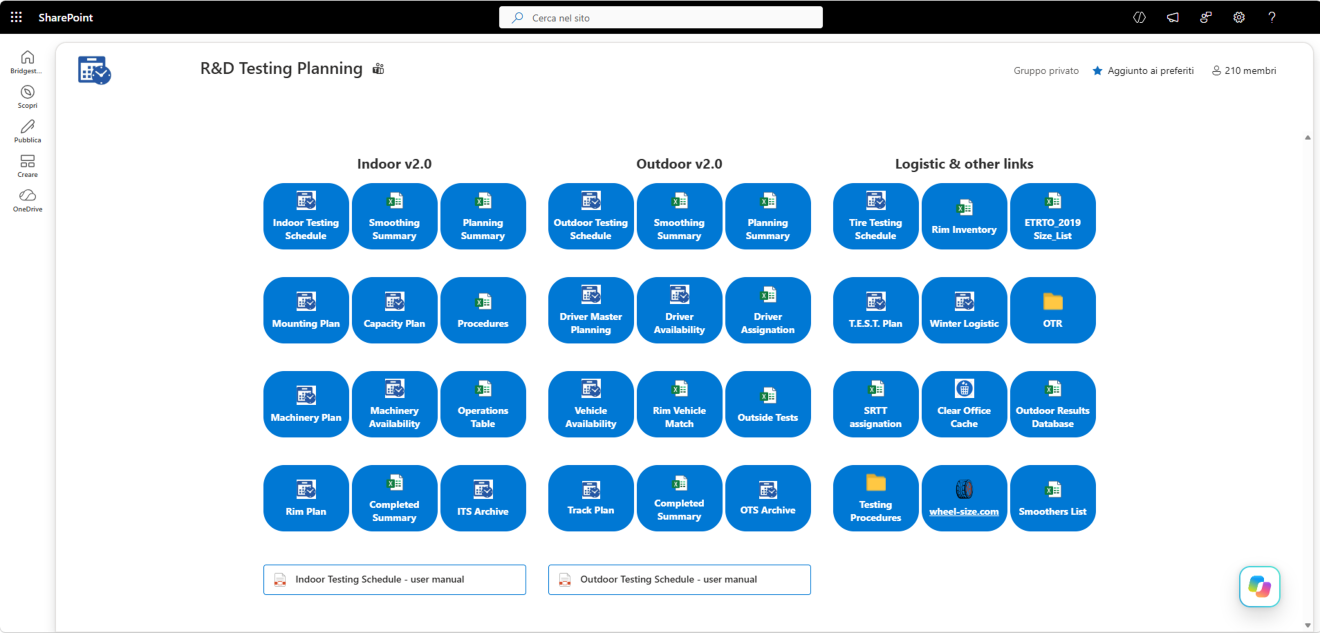
Every component of the system is part of a broader ecosystem in which data and information are automatically shared to ensure alignment between different teams and minimize manual activities.
From test request to execution
Each activity begins with a new test request. From that moment on, the system guides the process through all operational phases.
Requests are collected, analyzed, and compared against the availability of necessary resources. Feasibility is verified by simultaneously considering vehicles, tires, rims, machinery, tracks, measuring instruments, and available personnel.
Once the feasibility of the test is confirmed, the platform supports activity planning and coordinates all operations required for preparation, including procurement, bookings, assembly, assignments, and logistics activities.
To ensure compliance with schedules and reduce the risk of delays, the system also integrates a comprehensive automated notification system. Key events, deadlines, and operational conditions are monitored at every stage of the process, generating alerts and reminders for managers when intervention is required. Notifications can highlight resource unavailability, delayed activities, missing samples, incomplete assignments, capacity saturation situations, or other elements that could compromise test progress. This approach makes it possible to anticipate problems rather than merely managing them after they have already occurred.
The result is a continuous workflow that connects the planning phase with the execution phase, keeping the status of activities constantly updated and promoting proactive management of the entire testing process.
Immediate visual planning
One of the core elements of the platform is represented by the Indoor and Outdoor planning calendars.
Activities are displayed via Gantt charts that allow users to quickly understand what has been planned, which resources are involved, and how the workload is distributed over time.
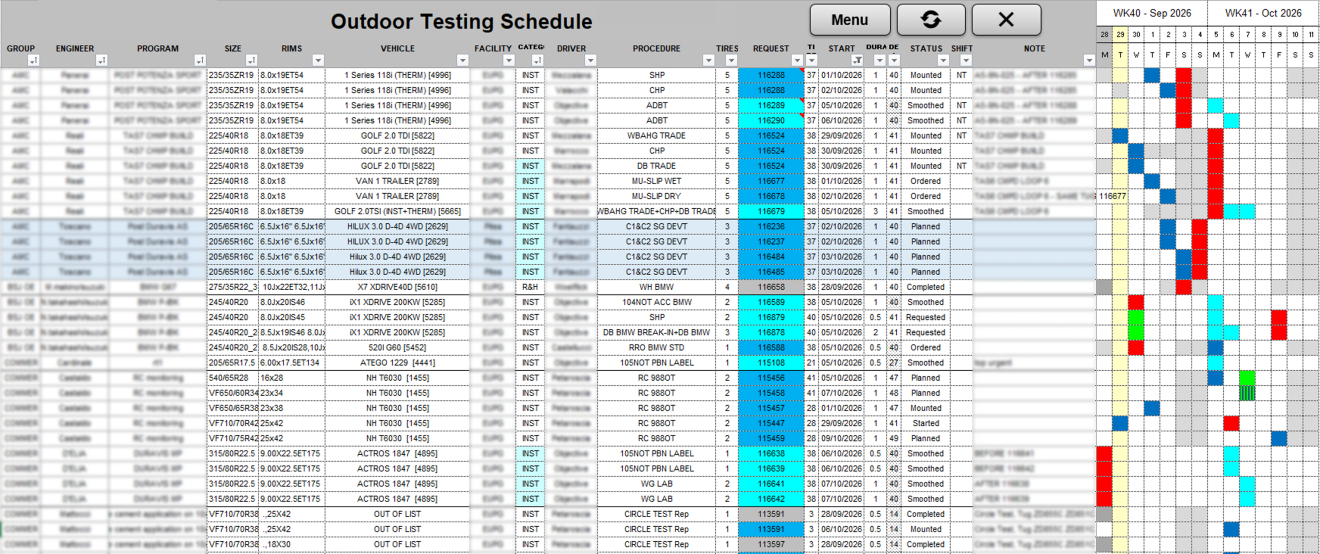
Through these views, it is possible to immediately identify overlaps, saturation periods, scheduling conflicts, and optimization opportunities.
What would normally require the analysis of numerous different sheets or documents is made available on a single, easily browsable screen.
Managing resource complexity
Testing activities depend on the simultaneous availability of numerous resources, often shared among different groups and programs.
The platform makes it possible to continuously monitor the availability of vehicles, tires, rims, laboratory machinery, test tracks, and operational personnel.
Each assignment is integrated into the planning process, reducing the risk of conflicts and improving the overall utilization of available resources.
This approach transforms resource management from a reactive activity into a structured and controlled process, offering greater reliability in defining operational plans.
Capacity under control
Planning new activities without knowing the actual available capacity can quickly lead to overloads, delays, and inefficiencies.
For this reason, the system integrates dedicated dashboards for monitoring operational capacity.
Managers can check in real-time how much of the available capacity has already been allocated, which areas are close to saturation, and where there is still room to accommodate new requests.
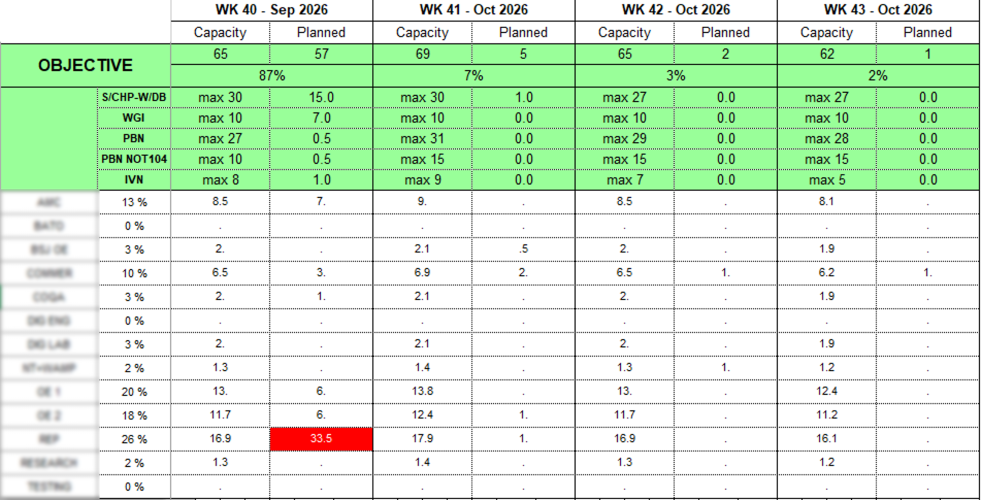
This visibility enables faster and more informed decision-making, preventing problems from emerging only when the process is already delayed.
Particularly important is the ability to identify potential bottlenecks in advance and evaluate alternative scenarios before they impact planned activities.
Data transformed into information
The platform does not limit itself to supporting future planning. Every completed activity automatically feeds an information base that allows the analysis of operations trends over time.
Interactive dashboards make it possible to quickly explore thousands of executed tests through dedicated filters for work groups, procedures, vehicles, drivers, laboratories, tracks, and time periods.
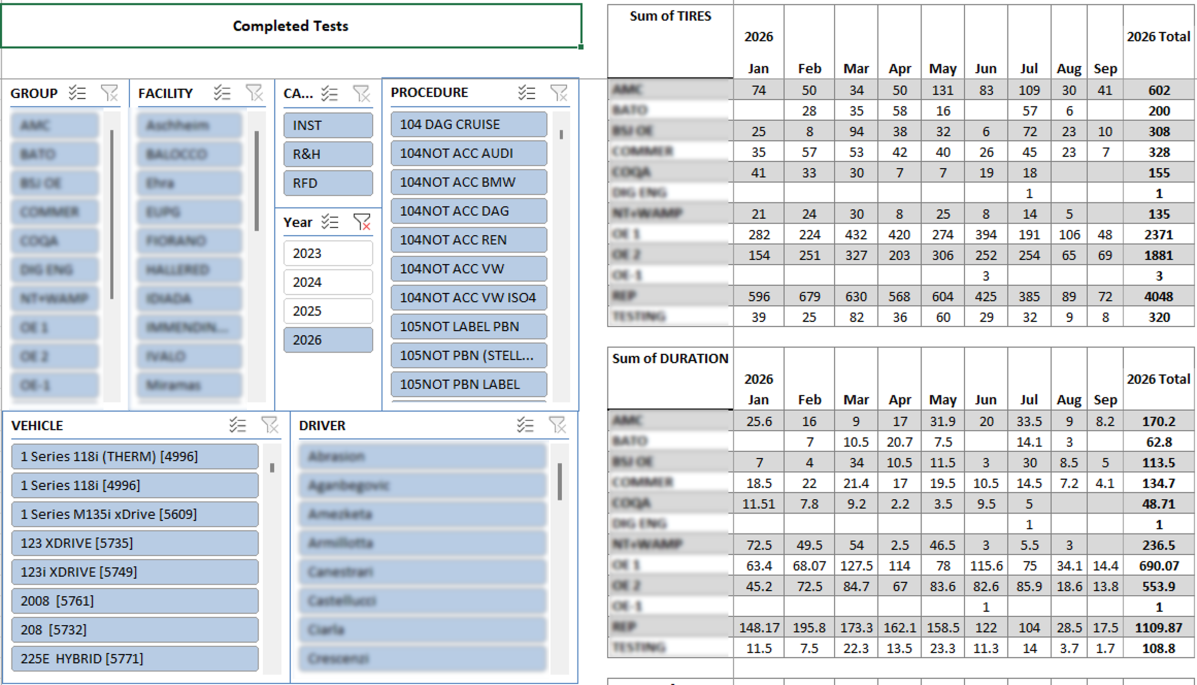
In a few moments, it is possible to obtain a detailed view of resource utilization, the volume of activities carried out, and the distribution of the operational workload.
This information becomes a valuable tool not only for daily monitoring, but also for capacity planning, continuous improvement, and strategic decision support.
An ecosystem built around real processes
One of the aspects that distinguishes this solution from many traditional tools is the fact that it was not designed starting from technology, but from operational processes.
Every feature stems from concrete needs in planning, preparation, execution, and reporting of testing activities.
The platform does not replace people's work; rather, it amplifies its effectiveness by providing updated information, greater visibility, and decision-making tools that allow complex activities to be managed with greater efficiency.
Conclusions
Today, Excel and its associated automation technologies make it possible to achieve much more than simple spreadsheets.
Through proper design, it is possible to create true operational ecosystems capable of coordinating processes, resources, and people within a single working environment.
This Testing Planning Ecosystem is a concrete example of this: a platform capable of integrating planning, resource management, capacity control, and performance analysis, offering a complete overview of the entire testing process, from the initial request to the generation of the final report.